Maritime Insights
Why Crew Management Software Is Transforming the Maritime Industry
The maritime industry moves over 80 percent of the world's goods across oceans, relying on nearly two million seafarers to keep global trade flowing. Behind every successful voyage is a complex operation that involves recruiting qualified personnel, scheduling rotations, processing payroll across multiple currencies, and ensuring compliance with international regulations. For shipping companies still depending on spreadsheets and manual processes, these tasks quickly become overwhelming.
That is exactly where crew management software maritime solutions step in, replacing outdated workflows with centralized, digital platforms designed for the unique demands of the shipping sector.
The Growing Need for Digital Crew Management
Running a fleet means coordinating dozens, sometimes hundreds, of crew members across multiple vessels spread around the world. Each seafarer carries specific certifications governed by the Standards of Training, Certification, and Watchkeeping (STCW) convention, and every contract must comply with the Maritime Labour Convention (MLC). Tracking all of this manually is not just inefficient; it introduces serious compliance risks.
Modern marine crewing software eliminates these risks by centralizing crew data, automating certificate expiry alerts, and providing real-time visibility into workforce availability. Instead of searching through filing cabinets or outdated spreadsheets, operations teams can access a single platform that holds every seafarer's qualifications, travel documents, medical records, and employment history.
RiteCrew Core Features That Make the Difference
Not all solutions are created equal. The RiteCrew ship crew management softwareplatforms offer a suite of integrated modules that cover the full lifecycle of maritime workforce management. Here are the features that matter most.
Crew Management
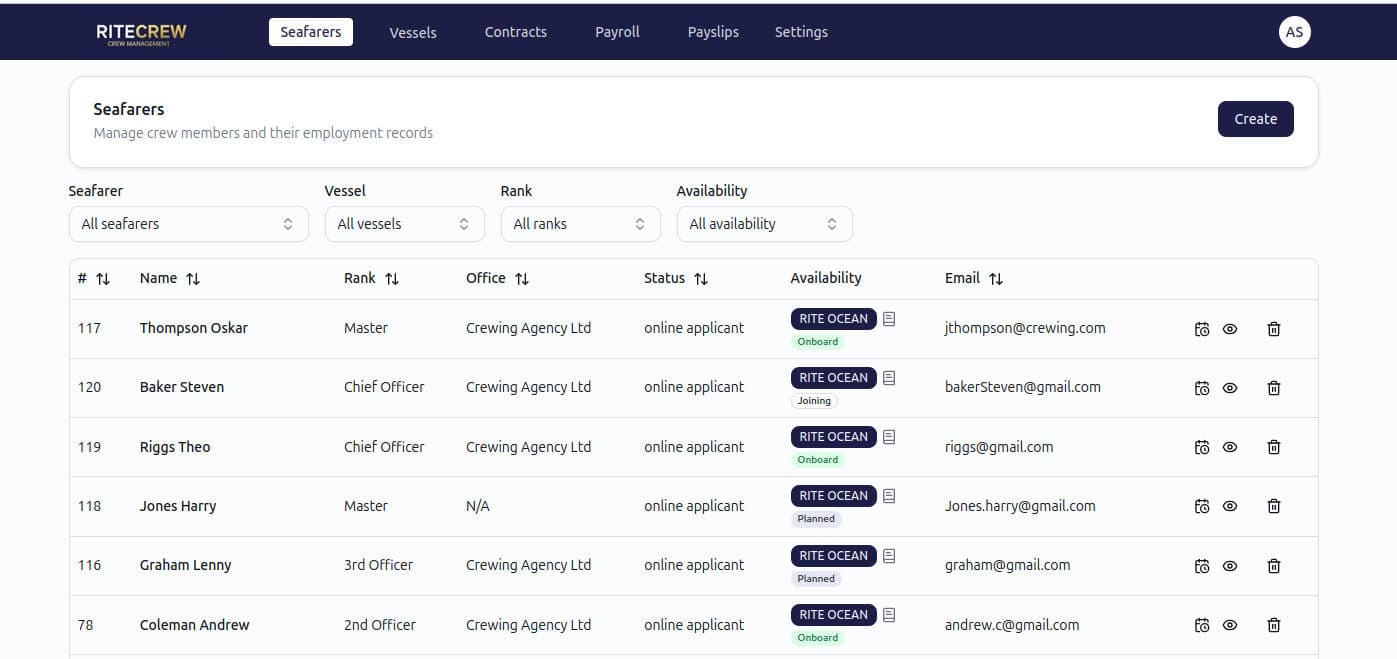
At the heart of any maritime HR platform is a comprehensive crew database. This module stores detailed profiles for every seafarer, including certifications, sea service records, next-of-kin information, and contract details. Advanced search and filtering capabilities let crewing officers find the right candidate for a specific vessel and rank in seconds rather than hours. Automated alerts ensure that no certificate expires unnoticed, keeping your fleet compliant at all times.
Planning and Scheduling
Crew rotation planning is one of the most complex tasks in maritime operations. You need to account for contract durations, rest-hour regulations, certification validity, visa requirements, and individual crew preferences, all while minimizing gaps in vessel manning.
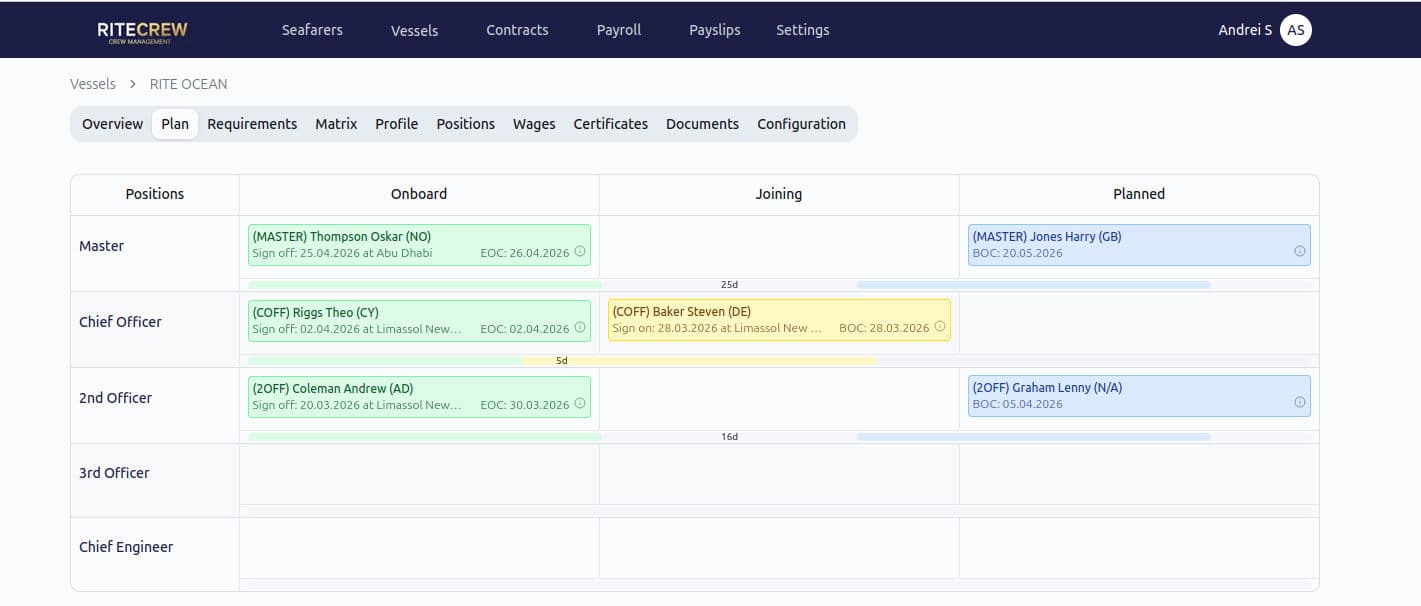
Vessel crewing software with intelligent scheduling tools simplifies this process by visualizing crew plans on interactive timelines, flagging potential conflicts before they become problems, and suggesting optimal rotation patterns. The result is fewer last-minute replacements, lower travel costs, and better crew satisfaction.
Payroll Management
Maritime payroll is uniquely complicated. Seafarers often come from different countries, work under varying flag state regulations, and are paid in multiple currencies. Allotments, overtime calculations, leave pay, and tax obligations differ from one jurisdiction to the next.
A dedicated payroll module within your crew management software maritime platform handles all of these variables automatically. It calculates wages based on rank, vessel type, and contract terms, generates pay slips, and ensures that allotments are distributed to family members on time.
Applicant Management
The maritime industry faces ongoing challenges in recruiting skilled seafarers. An integrated applicant management module streamlines the entire hiring pipeline, from posting job openings and receiving applications to screening candidates and managing interviews. Marine crewing software with built-in recruitment tools lets you maintain a talent pool of pre-vetted candidates, so when a position opens up, you already have qualified seafarers ready to deploy.
Crew Self-Service Mobile App
Today's seafarers expect the same digital convenience they experience in every other aspect of their lives. A crew self-service mobile app empowers them to view their upcoming schedules, access contracts and pay slips, update personal documents, and communicate with the office, all from their smartphone. This reduces the administrative burden on shore-based teams while improving transparency and crew engagement.
Why Maritime Companies Are Making the Switch
Shipping companies that adopt ship crew management software consistently report measurable improvements across their operations. Administrative workloads drop significantly when manual data entry is replaced by automated processes. Compliance becomes proactive rather than reactive, with the system flagging issues before they result in port state detentions or audit failures. Crew scheduling becomes more efficient, reducing costly last-minute travel arrangements and overtime expenses.
Beyond operational efficiency, vessel crewing software gives fleet managers access to analytics and reporting tools that reveal patterns in crew turnover, training gaps, and labor costs. These insights enable data-driven decisions that improve both financial performance and crew welfare.
Choosing the Right Solution
When evaluating crew management software maritime platforms, look for solutions that are purpose-built for the maritime industry rather than adapted from generic HR tools. The right platform should understand flag state regulations, MLC requirements, and the operational realities of managing a global seafaring workforce. It should be cloud-based for accessibility, scalable to grow with your fleet, and backed by a vendor who understands the maritime domain.
Integration capabilities also matter. Your crewing platform should connect seamlessly with existing fleet management systems, accounting software, and travel booking tools to create a unified operational ecosystem.
The Bottom Line
The maritime industry is evolving, and the companies that thrive will be those that embrace digital transformation in their crew operations. Whether you manage a small fleet of cargo vessels or a large cruise line operation, investing in dedicated marine crewing software is no longer optional. It is the foundation for safer, more compliant, and more cost-effective maritime operations.
The right platform does not just manage your crew; it gives you the tools to build a stronger, more resilient workforce for the future.